La gestión del gobernador Gustavo Melella parece haber entrado en un laberinto de errores procesales del que no puede, o no sabe, salir. En un nuevo capítulo de esta saga de impericia, el presidente de la Dirección Provincial de Puertos (DPP), Roberto Murcia, intentó una maniobra desesperada: recusar sin causa al Juez Federal Federico Calvete. El resultado fue un rechazo contundente que no solo ratifica la soledad del gobierno provincial, sino que envía un segundo expediente al "limbo" de la Corte Suprema de Justicia de la Nación.
Una recusación vacía para ocultar la derrota
La presentación de Roberto Murcia es, técnicamente, un sinsentido. Intentar apartar al juez cuando este ya había dictaminado la incompetencia del juzgado local en la causa principal (la promovió el propio Melella), solo puede entenderse como un intento de dilatar lo inevitable o de buscar un "chivo expiatorio" judicial para justificar el desapoderamiento del puerto.
Tanto el Juez Federico Calvete como el Fiscal interino, Fernando Rota, fueron clarísimos: no hay fundamentos para la recusación. La DPP pretendía quitarle el trámite a quien ya les había dicho que el mostrador para reclamar no era Ushuaia, sino la Ciudad de Buenos Aires. Este nuevo traspié confirma que la estructura política de Puertos está tan perdida en los tribunales como lo está en la gestión operativa del muelle.
El "Efecto Espejo" y el viaje a la Corte
Lo más grave de esta resolución (Expte. FCR 719/2026) es que el Juez Calvete ha decidido acumular este proceso al planteo inicial del Gobernador. Al existir una "estrecha vinculación" y para "garantizar la seguridad jurídica", este nuevo expediente también ha sido remitido mediante pase digital a la Corte Suprema de Justicia de la Nación.
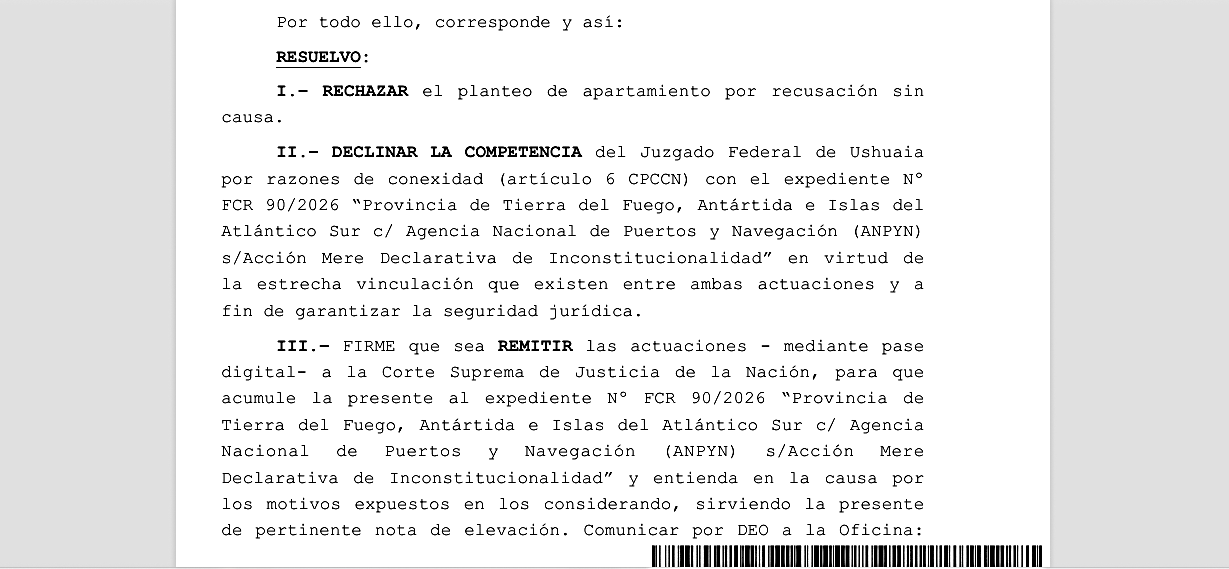
Con esta decisión, el gobierno de Tierra del Fuego ha logrado "blindar" la intervención nacional. Ahora no hay una, sino dos causas durmiendo en los despachos de la Corte, un organismo que se toma años para resolver conflictos de esta índole. Mientras Melella y Murcia juegan a los abogados en expedientes que son rechazados por "incompletos" o "sin causa", el interventor Juan Avellaneda consolida el control nacional sobre el activo estratégico más importante de la provincia.
Las preguntas que Murcia debe responder
Este nuevo paso en falso obliga a profundizar los interrogantes sobre la idoneidad de los funcionarios:
1. ¿Quién asesora a la DPP? ¿Se consultó esta recusación con el estudio de los 60 mil dólares o fue otra iniciativa propia de la "orquesta de improvisados" que rodea al gobernador?
2. Gasto inútil de recursos: Cada una de estas presentaciones fallidas consume tiempo y recursos del Estado fueguino, solo para recibir lecciones de derecho básico por parte de la justicia federal.
3. La complicidad de la inaptitud: Al intentar recusar al juez, Murcia solo logró confirmar que no tienen argumentos técnicos para rebatir los informes de la ANPyN sobre los pilotes rotos, el caos contable y el desvío de fondos a la OSEF.
El fin de la resistencia de papel
Ushuaia asiste al final de una puesta en escena. La gestión actual ha agotado todos sus cartuchos de pirotecnia judicial. La recusación rechazada a Murcia es el símbolo de un gobierno que prefiere pelearse con el juez antes que admitir que dejó caer el puerto por desidia.
Hoy, la soberanía portuaria de Tierra del Fuego está en manos de una Corte Suprema lejana, gracias a la acumulación de errores de Melella y su gabinete. El puerto no fue "robado" por la Nación en una noche; fue entregado en cómodas cuotas de incompetencia por funcionarios que, hasta el último minuto, prefirieron el manotazo de ahogado antes que la transparencia y la gestión.
Tags
Otras noticias de Tierra del fuego
No es economía, es soberanía: El trasfondo del ataque del Banco Mundial a Tierra del Fuego
Los Excombatientes de Ushuaia acompañarán la creación de una Comisión Investigadora por el radar británico
Desde Tierra del Fuego instan a Cancillería a frenar el saqueo petrolero en Malvinas