El Falkland Islands Newsletter N° 72 de mayo de 1998, una publicación del Falkland Islands Association; revelado ayer por Agenda Malvinas, en la que se puede verificar que el 27 de abril de 1997, se concretó la primera perforación en las Islas Malvinas; afirmaba además que para esa tarea la plataforma Borgny Dolphin había sido remolcada 13.500 km desde Noruega. Sin embargo, luego de cotejar la información con fuentes de la Cancillería pudimos comprobar que los redactores del Newsletter mintieron. Ocultando deliberadamente que la unidad ya operaba en la Cuenca Marina Austral bajo jurisdicción nacional, por la francesa Total y la privatizada YPF. Un ahorro logístico millonario que fue servido en bandeja por el gobierno de Carlos Menem y su canciller Guido Di Tella.
En aquella jornada, la plataforma semisumergible Borgny Dolphin inició las tareas de perforación del primer pozo ilegal para la petrolera estadounidense Amerada Hess en el bloque A de la Cuenca Norte (el área que hoy integra la Licencia PL001).
Durante casi tres décadas, el relato oficial montado por la administración colonial británica intentó otorgar a esa operación una épica de logística transoceánica. En esa edición del Falkland Islands Newsletter (mayo de 1998), la Falkland Islands Association celebraba el acontecimiento afirmando que la imponente estructura flotante "había sido remolcada más de 8.000 millas (13.500 km) desde Noruega a través del Océano Atlántico en un viaje de varias semanas".
No obstante, la confrontación de datos históricos y fuentes diplomáticas y técnicas de la Cancillería argentina de la época, expusieron una realidad sustancialmente distinta: la publicación británica falseó el origen del desplazamiento o bien ocultó deliberadamente la posición real de la plataforma para encubrir una escandalosa colaboración logística.
La plataforma que "apareció" en el norte de Malvinas
Del testimonio de los propios excombatientes y diversas fuentes vinculadas a la política exterior y al sector energético de finales de los años noventa consultados por Agenda Malvinas, confirmaron que la plataforma semisumergible no encaró un periplo épico desde el Mar del Norte directamente hacia el archipiélago. La unidad ya se encontraba operando en aguas de la plataforma continental argentina, realizando tareas de exploración y evaluación técnica en la Cuenca Marina Austral, frente a las costas del norte de la Isla Grande de Tierra del Fuego (al norte de Río Grande y frente a Bahía de San Sebastián).
En aquel período (1996-1997), el consorcio operador en la zona —encabezado por Total Austral e YPF S.A. (en pleno proceso de privatización parcial con su paquete accionario disperso en fondos de inversión de Wall Street y conducida gerencialmente primero por José Estensoro y luego por Roberto Monti), llevaba adelante una activa campaña de perforación evaluatoria sobre yacimientos como Carina, Aries y Vega Pléyade.
El traslado de una plataforma de perforación de aguas profundas e intermedias a fines de los años 90 -desde el Hemisferio Norte hacia el Atlántico Sur-, hubiera representado para la colonia usurpadora y sus socios un costo operativo de varias decenas de millones de dólares solo en flete, remolque y seguros. Al haber contado con una unidad posicionada a pocas millas marítimas sobre el lecho continental argentino, el consorcio británico-estadounidense (integrado por Amerada Hess, Shell, LASMO e IPC) logró amortizar y reducir de forma drástica sus costos de movilización.
La exploración aprobada y tolerada en la plataforma continental argentina por la gestión Menem-Di Tella terminó financiando de manera implícita y directa el desembarco británico en las islas.
El mapa de plataformas en la Cuenca Marina Austral (1996-1998)
En el período previo y coincidente al 27 de abril de 1997 -“día cero” del petróleo en Malvinas-, el lecho marino del norte de la Isla Grande de Tierra del Fuego albergó una intensa actividad hidrocarburífera. Unidades semisumergibles como la Atwood Southern Cross, la Noble Kol Ancient y la propia Borgny Dolphin (junto a plataformas autoelevables de desarrollo en áreas someras) operaron frente a las costas de Río Grande y San Sebastián para el consorcio de Total e YPF. La proximidad geográfica y operativa de este parque offshore facilitó el traspaso logístico hacia la ilegal Cuenca Norte de Malvinas bajo el amparo de la política de neutralidad y los Acuerdos de Nueva York de 1995.
El "Paraguas de Soberanía" y los Acuerdos de Nueva York de 1995
Esta maniobra logística no ocurrió en un vacío político. Tuvo su caldo de cultivo en la arquitectura diplomática diseñada por el canciller Guido Di Tella y el vicecanciller Andrés Cisneros, bajo el liderazgo del presidente Carlos Saúl Menem.
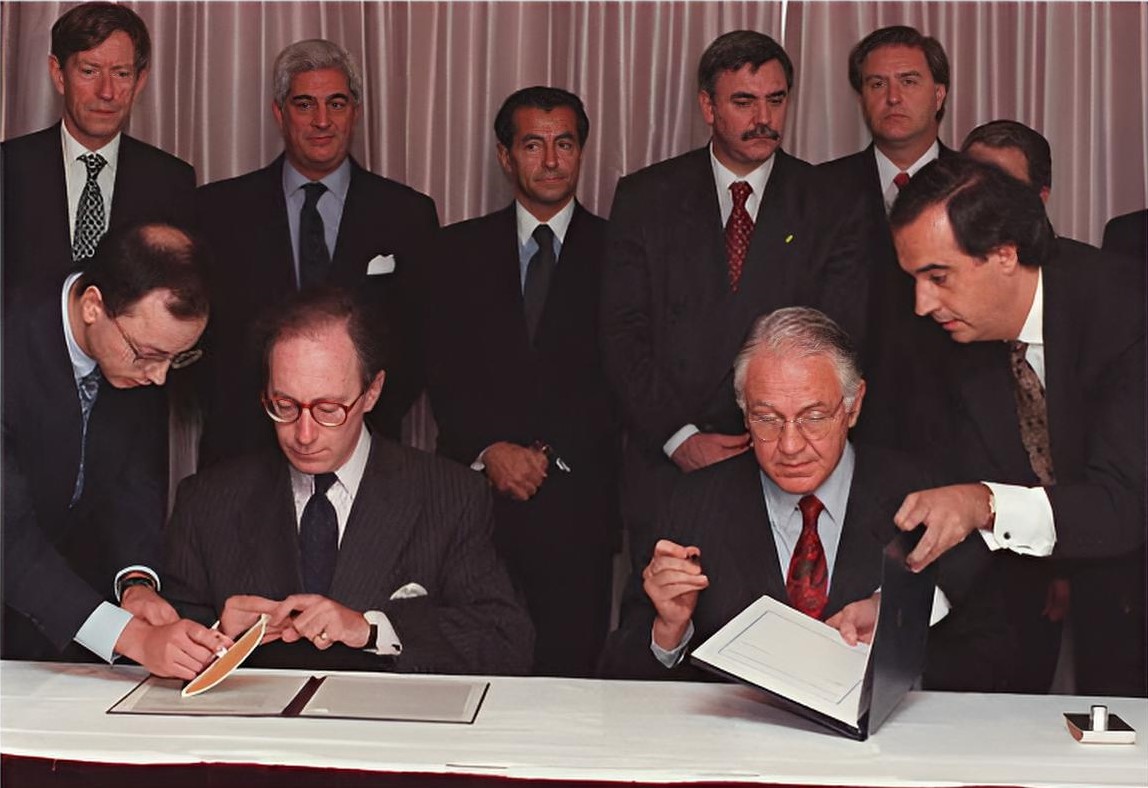
El 27 de septiembre de 1995, la Argentina y el Reino Unido firmaron en Nueva York la "Declaración Conjunta sobre Cooperación en Actividades Costa Afuera en el Atlántico Sudoccidental". Bajo la falacia del "paraguas de soberanía", el gobierno argentino aceptó crear una zona de cooperación hidrocarburífera e incentivó un clima de entendimiento comercial que fue aprovechado unilateralmente por Londres.
Mientras el Foreign Office celebraba el avance de las licencias y la llegada de buques de apoyo desde Aberdeen como el Kapitan Vaga o el Maersk Puncher, la Cancillería argentina se limitaron a enviar tenues notas de protesta a la Embajada británica en Buenos Aires que jamás se tradujeron en acciones punitivas ni en el bloqueo efectivo de los insumos que circulaban por el Atlántico Sur.
El propio boletín de la colonia británica de mayo de 1998 reflejaba con cinismo la ineptitud diplomática argentina: "A pesar del Acuerdo Petrolero de 1995, los argentinos acusan a Gran Bretaña de avanzar unilateralmente 'sin su permiso'... Gran Bretaña rechaza esto con firmeza, insistiendo en que cualquier petróleo en sus aguas pertenece a las Malvinas".
De la pasividad de los '90 a la Ley Pino Solanas
La inacción deliberada de la diplomacia de los años 90 dejó una mancha imborrable en la custodia del patrimonio nacional. Tuvo que pasar casi una década para que el Estado argentino intentara dotarse de herramientas de defensa efectivas. Fue recién en 2007 (y posteriormente profundizado en 2011 y 2013) cuando, por impulso del recordado cineasta y senador Fernando "Pino" Solanas, el Congreso de la Nación sancionó las modificaciones a la Ley de Hidrocarburos 26.659.
La denominada "Ley Pino Solanas" fijó por primera vez sanciones penales, inhabilitaciones administrativas, deslistados (o delisting) bursátiles y embargo de bienes para todas aquellas empresas hidrocarburífera o de logística offshore que participaran sin autorización argentina en la exploración de las islas, o que prestaran apoyo técnico desde el continente a la ocupación colonial.
Sin embargo, el antecedente histórico de abril de 1997 demuestra que las corporaciones petroleras no actuaron solas. El avance británico en la Cuenca Norte del archipiélago no solo se nutrió del capital especulativo de la City de Londres, sino de la complacencia de una Cancillería argentina que prefirió mirar hacia otro lado mientras una plataforma que operaba en Tierra del Fuego zarpaba hacia Malvinas para consolidar el despojo.
Tags
Otras noticias de Nacionales
Habrían desaparecido 4 billones de pesos en las cuentas del Tesoro Nacional
Argentina sancionó al Hai Xing 2 con $1.833 millones por pesca ilegal
La AFA entregará a los excombatientes, la bandera aparecida luego del triunfo contra Inglaterra