La toma de control sobre la Licencia PL001 por parte de la canadiense Eco Atlantic (35%) y la israelí Navitas Petroleum (65%) no es un hecho aislado ni una simple coincidencia bursátil. Los documentos presentados ante las bolsas de comercio de Tel Aviv (TASE), Toronto (TSX-V) y Londres (LSE/AIM) revelan la existencia de una alianza corporativa global dirigida por un entramado de ejecutivos y financistas con sede en Israel, apalancada en la cobertura política y financiera del Reino Unido.
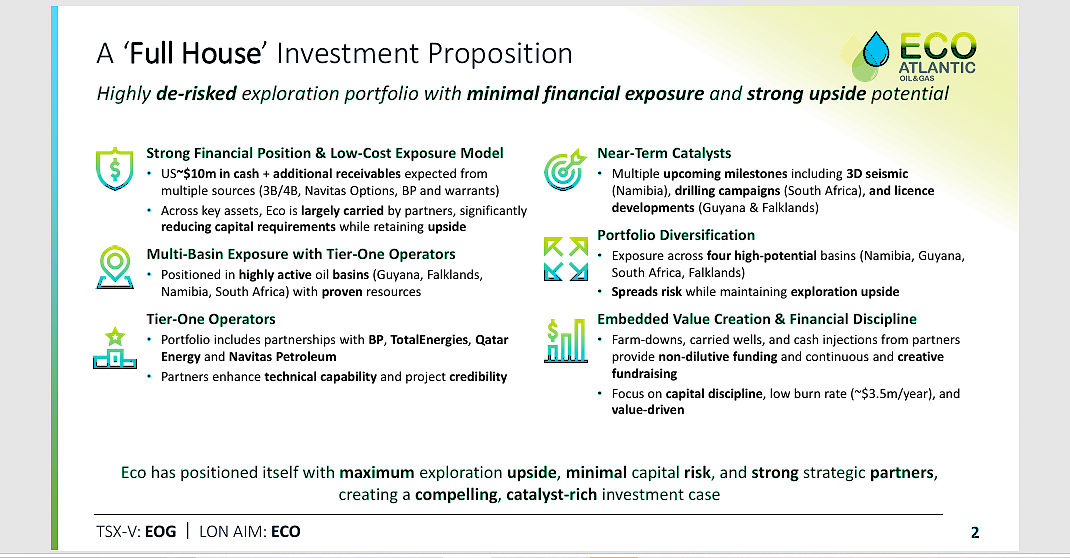
Propuesta de inversión de Eco Atlantic presentada a los mercados de Toronto y Londres, donde destaca sus alianzas clave con Navitas Petroleum, BP, TotalEnergies y Qatar Energy.
El entramado trasatlántico: De Tel Aviv a las bolsas de Londres y Toronto
El circuito que legaliza el despojo sobre la plataforma continental argentina requiere de cada una de estas estaciones estratégicas:
1. Tel Aviv (Dirección y Capitales): Desde donde operan los principales ejecutivos y los fondos de inversión que financian la ingeniería de exploración y desarrollo.
2. Londres (Estructura Colonial y Mercado Financiero): Donde el gobierno ocupante emite las licencias ilegítimas y donde cotizan las acciones que captan el capital especulativo europeo (a través del mercado AIM de la Bolsa de Valores de Londres).
3. Toronto (Apalancamiento Bursátil): Plaza clave en la minería y energía global que permite empaquetar activos y concretar absorciones corporativas como la de JHI.
4. Puerto Argentino (Sede Administrativa de Ocupación): La ventanilla colonial que valida los traspasos, concede extensiones de plazos y pretende dar barniz de legalidad a la expropiación de recursos argentinos.
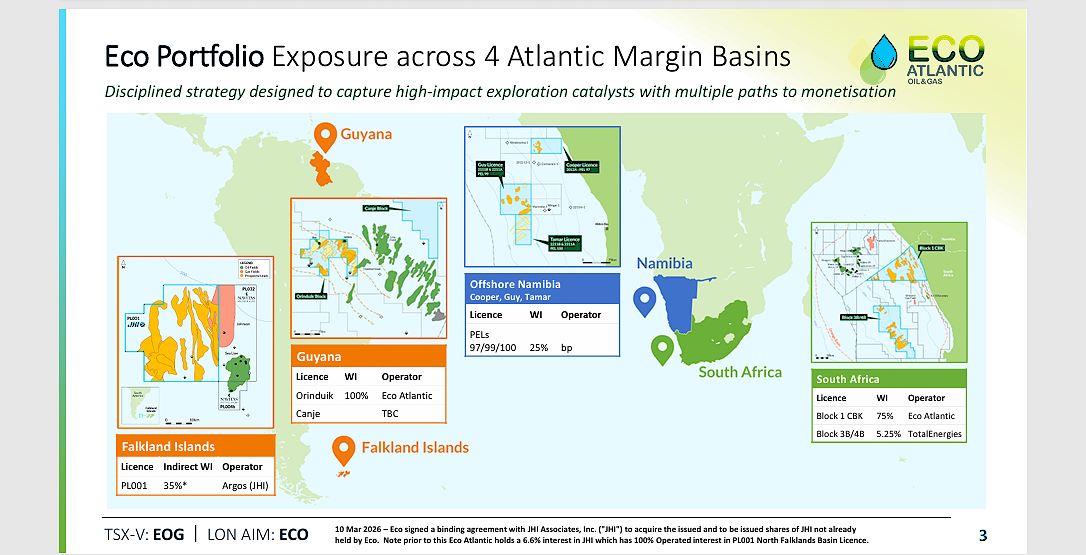
Distribución del portafolio global de Eco Atlantic en cuatro cuencas del Margen Atlántico. Se observa en el margen inferior izquierdo el detalle de la Licencia PL001 en Malvinas con el 35% de participación, junto a los bloques en Guyana, Namibia y Sudáfrica.
El cartel Eco Atlantic - Navitas: Una alianza transnacional
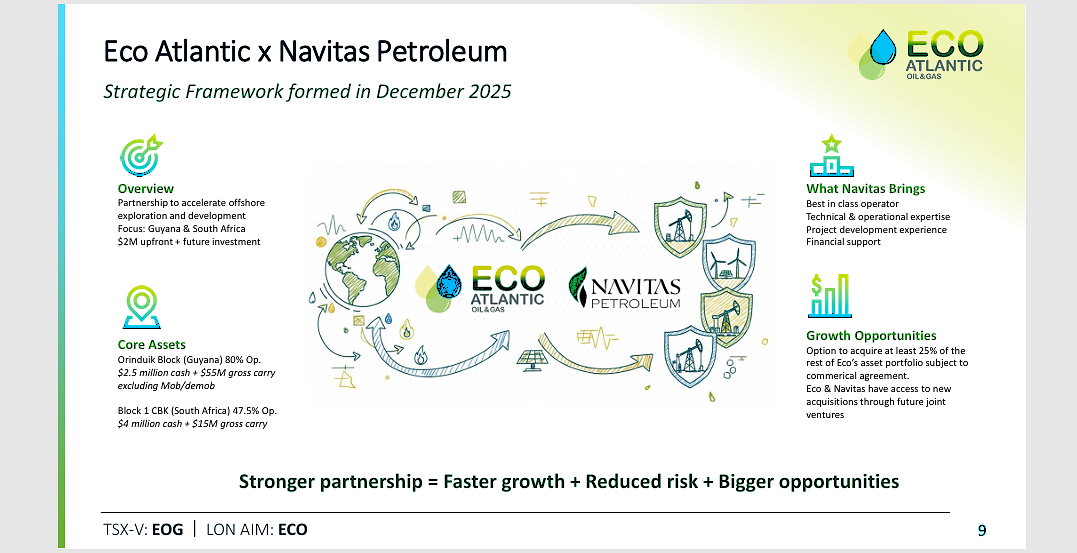
Facsímil de la página 9 de la presentación oficial de Eco Atlantic. Detalla el "Marco Estratégico Global" firmado con Navitas Petroleum en diciembre de 2025 para operar en conjunto en Guyana y Sudáfrica, incluyendo los pagos en efectivo, los millones en financiamiento de pozos y la opción de preferencia sobre futuros activos.
En diciembre de 2025, Eco Atlantic y Navitas Petroleum firmaron un "Marco Estratégico Global" (Strategic Framework). El objetivo no era únicamente operar en Malvinas, sino repartirse bloques petroleros en las cuencas offshore de mayor potencial del hemisferio sur:
- Cuenca de Guyana: En el bloque Orinduik, Eco le cedió a Navitas la operatividad a cambio de 2,5 millones de dólares en efectivo y 55 millones de dólares en financiamiento de perforación.
- Cuenca Orange (Sudáfrica): En el bloque 1 CBK, Eco le otorgó a Navitas la opción del 47,5% y la operatividad por 4 millones de dólares en efectivo más 15 millones de dólares en acarreo sísmico.
- Cláusula de preferencia: Navitas cuenta con la opción de adquirir al menos el 25% de cualquier nuevo yacimiento o licencia que incorpore el portafolio de Eco Atlantic a nivel global.
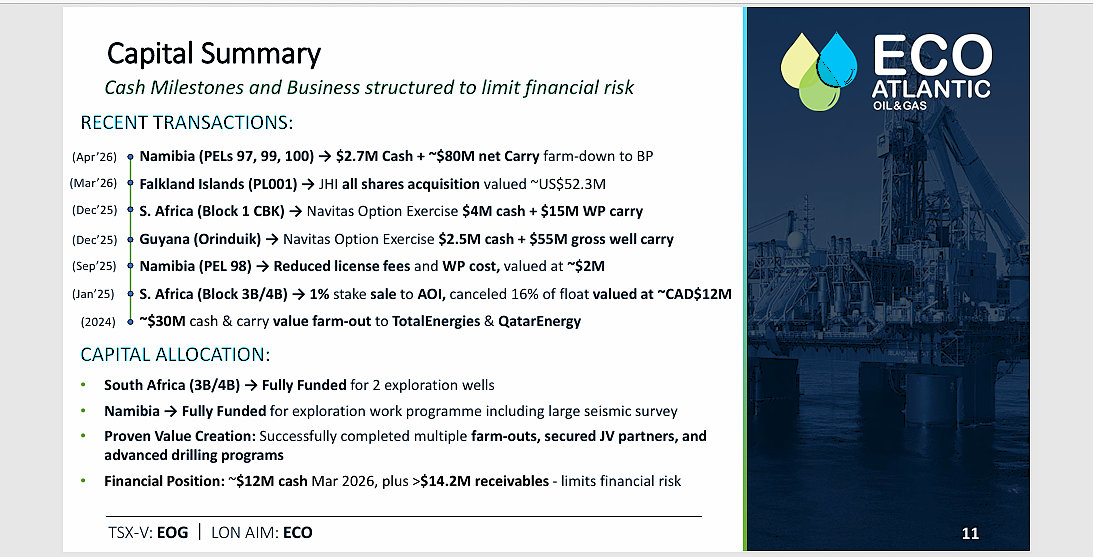
Resumen del capital y transacciones recientes. El documento oficial de mayo de 2026 confirma la adquisición de todas las acciones de JHI sobre la Licencia PL001 de Malvinas por una valuación de U$S 52,3 millones (Mar'26), así como los pases de fondos con Navitas en Guyana y Sudáfrica.
La identidad directiva: Las mismas autoridades en Tel Aviv
La articulación entre ambas empresas se explica al revisar sus cúpulas directivas. El núcleo de mando financiero y operativo responde al mismo sector corporativo de Israel:
- Eco (Atlantic) Oil & Gas Ltd.: Su Presidente y CEO es Gil Holzman, un ejecutivo israelí con más de 25 años en el sector minero y energético transnacional. El Vicepresidente de Finanzas (CFO) es Gadi Levin, contador y graduado con un MBA de la Universidad Bar Ilán de Israel.
- Navitas Petroleum: Su fundador y Presidente es Gideon Tadmor, pionero de la industria hidrocarburífera israelí y ex titular de Delek Drilling, flanqueado en la dirección ejecutiva por Amit Kornhauser (CEO).
No se trata de empresas competidoras, sino de un tándem corporativo que opera de manera coordinada. Usan filiales constituidas en Canadá, Reino Unido o paraísos fiscales para repartirse áreas hidrocarburíferas desde África Occidental hasta el Atlántico Sur. Con el control unificado de Sea Lion y la Licencia PL001, este grupo de ejecutivos tiene en sus manos la totalidad del futuro extractivo de la Cuenca Malvinas Norte.
El silencio y la inacción del Estado argentino
Mientras los balances corporativos en Tel Aviv, Londres y Toronto celebran el traspaso de activos por decenas de millones de dólares y anuncian la llegada del primer barril de crudo (first oil) para marzo de 2028, la respuesta institucional argentina brilla por su ausencia:
- Cancillería y el Ministerio de Economía de la Nación: No han emitido notificaciones formales a las comisiones de valores de Toronto (TSX-V), Londres (AIM/LSE) o Tel Aviv (TASE) para advertir la ilegalidad de las operaciones bajo la Ley 26.659. Tampoco han impulsado embargos o inhabilitaciones sobre las empresas asociadas a Navitas y Eco Atlantic.
- El Gobierno de Tierra del Fuego, Antártida e Islas del Atlántico Sur: A pesar de que la plataforma continental adyacente a las Islas Malvinas forma parte de la jurisdicción territorial de la provincia, la administración de Ushuaia mantiene un apagón informativo y administrativo. No existen querellas penales en curso, notificaciones autonómicas ni presentaciones formales ante el Consejo Federal de Hidrocarburos.
Los documentos corporativos e informes bursátiles transparentan con lujo de detalles la venta y el reparto de la plataforma continental argentina. Lo que las transnacionales publican en sus balances internacionales, las autoridades argentinas prefieren ignorarlo, dejando al patrimonio nacional desprotegido ante el mayor despojo hidrocarburífero del siglo XXI.
Fuentes:
Tags
Otras noticias de Internacionales
Alarma internacional: Premios Nobel exigen frenar el desmantelamiento atómico y tecnológico argentino
Keir Starmer dejó el cargo de primer ministro británico y asumió Andy Burnham
Revés para el colonialismo: la FIFA rechazó el pedido de sanción inglés y autorizó la bandera de Malvinas