
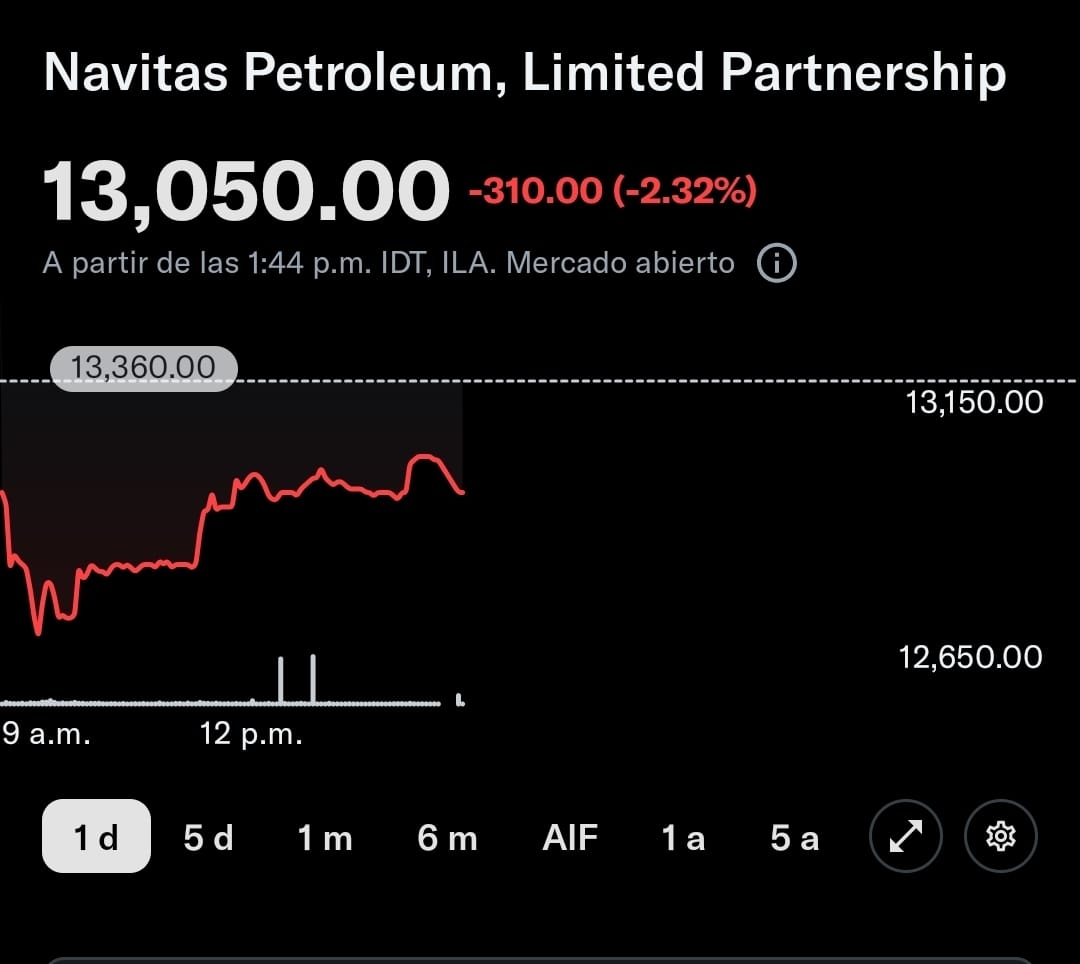
Judicial and political warnings regarding the clandestine exploitation of hydrocarbons in the Malvina Islands have begun to translate into tangible losses for the corporations involved. During the final trading sessions on Friday, September 4, shares of the British company Rockhopper Exploration plc on the London Stock Exchange (LSE/AIM) and of its operating partner Navitas Petroleum on the Tel Aviv Stock Exchange (TASE) experienced sharp declines, reflecting an immediate reassessment of the political, legal, and financial risks surrounding the Sea Lion field.
The setback accelerated in a synchronized manner after the formal presentation made on September 1 before the Federal Court of First Instance of Río Grande by the Center of Ex Combatants Malvinas Islands La Plata (CECIM) and the Argentine Association of Environmental Lawyers , which was joined hours later by the message on national broadcast by President Javier Milei announcing expedited sanctioning decrees under the Solanas Law (Law 26,659).
The reaction on the scoreboards: London and Tel Aviv in the red
In the London Stock Exchange, Rockhopper shares suffered an intraday decline of between 6% and 10% , breaking through the support level they had maintained following their recent capital raise. Meanwhile, in the Israeli financial market, Navitas Petroleum shares registered losses of between 2% and 3% .
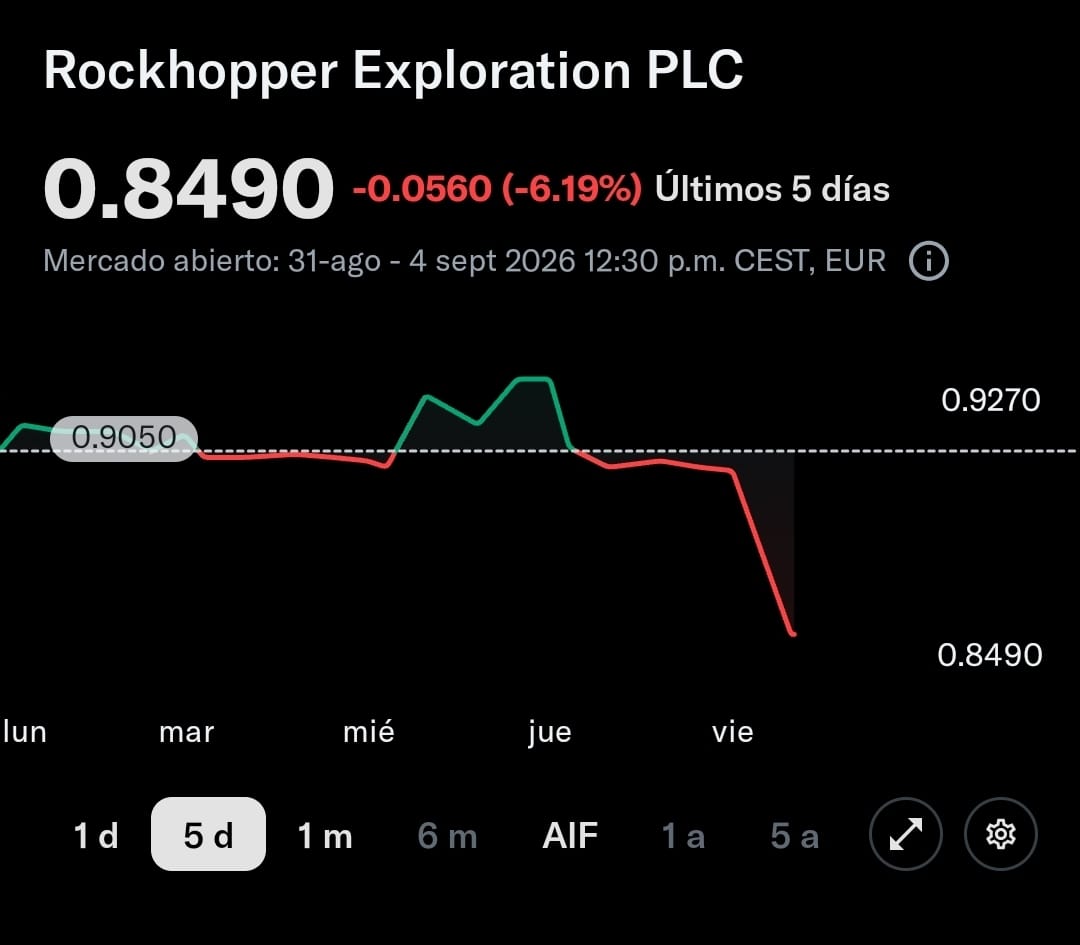
The international news agency Reuters reported on the volatility at the end of the week, noting a direct drop of nearly 6% for the British firm and 2% for the Israeli company, directly linking the movement to the legal escalation and the statements of the Argentine Executive.
In response to the stock market turmoil, company spokespeople issued statements of commitment to contain the impact on their shareholders, affirming that they operate under licenses they consider valid and assuring that the events should not affect the technical timeline towards 2028.
The environmental protection that pointed to the money trail
The temporal correlation between the legal filing and the withdrawal of investors corresponds to the legal architecture of the Preventive Action for Environmental Damage of Collective Impact (File FCR 13706/2026) processed in Rio Grande.
Unlike past declaratory claims, the legal argument presented by the lawyers of CECIM and the Environmental Lawyers Association requested a precautionary measure with a strong economic basis:
A risk premium that jeopardizes the project's viability
The signal emitted by the financial markets exposes the vulnerability of the colonial extractive model. For Rockhopper Exploration —a company with no active commercial production whose market capitalization rests almost exclusively on its illegitimate rights over the Northern Basin—any procedural or commercial obstacle threatens its balance sheet.
The simultaneous offensive by the Tierra del Fuego Federal Court and the government's announcement to extend sanctions and disqualifications to suppliers, insurers and intermediary banks introduced a variable that investors cannot ignore: the extraction of crude oil in the Malvinas ceased to be a predictable corporate procedure and became an operation fraught with legal contingencies and operational cost overruns.
Tags
Other news about International
Britain activates blocking law to protect oil companies in the Malvina Islands and neutralize Argentine sanctions
Chilean senator calls for blocking ships and cutting off land crossings to Argentina if it stops the ship bound for the Malvinas
Chilean intelligence anticipates a "critical event" with Argentina over the ship's departure for the Malvina Islands.


