El Puerto de Ushuaia, piedra angular de la provincia bicontinental y principal nodo logístico de la Argentina hacia la Antártida y las Islas Malvinas, atraviesa sus horas más oscuras desde que fuera transferido a la órbita provincial en 1992. Lo que comenzó como una maniobra legislativa para intentar tapar el agujero financiero de la Obra Social del Estado Fueguino (OSEF), ha terminado sirviendo en bandeja de plata; la excusa perfecta para que el Gobierno Nacional de Javier Milei decrete una intervención que despoja a Tierra del Fuego de su activo más estratégico.
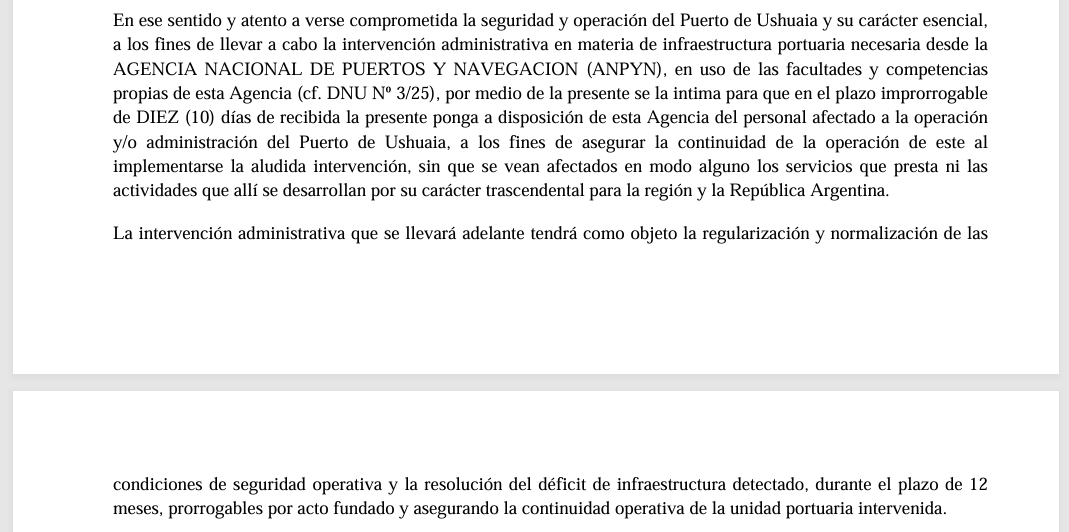
Mediante Nota NO-2025-139247837, del 16 de diciembre Director Ejecutivo de la AGENCIA NACIONAL DE PUERTOS Y NAVEGACIÓN (ANPYN) Iñaki Arreseygor, ordenó la intervención de la Dirección Provincial de Puertos de Tierra del Fuego.
Con este arsenal de fallas técnicas y el desvío de $1.411 millones bajo el brazo, Iñaki Arreseygor firmó el pasado 16 de diciembre el fin de la autonomía de la Dirección Provincial de Puertos (DPP), de Tierra del Fuego.
El detonante: La Ley 1596 y la "traición" sindical
La génesis de esta crisis se remonta a la sanción de la Ley Provincial N.º 1596. En un contexto de asfixia financiera para la salud pública provincial, la Legislatura autorizó al Poder Ejecutivo a utilizar los excedentes de la Dirección Provincial de Puertos (DPP) para financiar el déficit de la OSEF. Sin embargo, lo que parecía una solución doméstica violó el principio fundamental del Convenio de Transferencia firmado durante la presidencia de Carlos Menem: los recursos generados por el puerto deben ser reinvertidos exclusivamente en su infraestructura y operación.
La chispa que encendió la mecha, fue la denuncia formal de Juan Avellaneda, Secretario General de la seccional local de la Unión de Personal Superior Ferroviario (UPSF). Avellaneda no solo alertó sobre la ilegalidad del desvío de fondos, sino que abrió la puerta a que la Agencia Nacional de Puertos y Navegación (ANPyN), dirigida por Iñaki Miguel Arreseygor, pusiera en marcha una maquinaria de fiscalización sin precedentes.
El arribo de los "interventores técnicos"
El 30 de septiembre y el 1 de octubre de 2025 no fueron días comunes en el muelle de Ushuaia. Una comisión multidisciplinaria de la ANPyN desembarcó con una orden clara: auditar hasta el último tornillo y el último centavo. El equipo no escatimó en rangos: desde Cristian Rigueiro (Gerente de Coordinación Técnica) y Ariel Cherubini (Ingeniería Portuaria), hasta Mariano Multari (Administración y Finanzas) y Santiago Brusa (Asesor Legal).
Lo que estos funcionarios encontraron constituye un relato de "abandono y desidia" que justifica, según Nación; el ejercicio del "poder de policía" federal.
El informe de inspección inicial, que sirvió de base para la posterior resolución de intervención, comenzó a desgranar una realidad que la gestión de Gustavo Melella no pudo —o no supo— llevar adelante con eficacia, eficiencia y transparencia financiera.
Más allá de los libros contables
Si bien el foco inicial era el desvío de fondos a la OSEF, los técnicos nacionales motivados por el dirigente gremial, ampliaron el espectro de la investigación hacia áreas críticas que hoy forman parte del expediente de intervención:
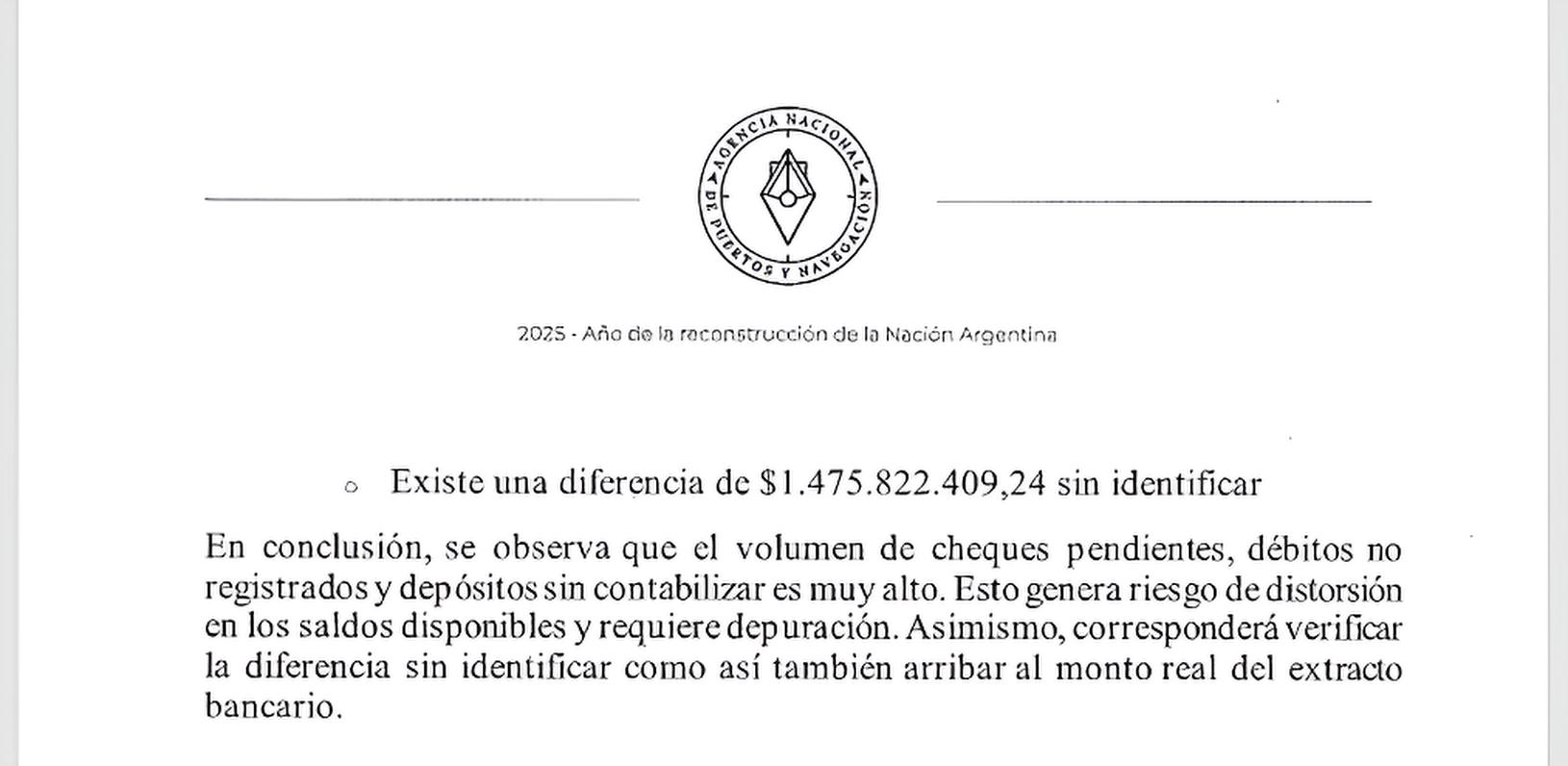
- El agujero financiero: La gerencia de Mariano Multari puso la lupa sobre las cuentas de la DPP. El dato es contundente: una inconsistencia de $1.411.758.261 en las conciliaciones bancarias que la provincia no pudo explicar satisfactoriamente. Mientras el superávit "volaba" hacia la obra social, el puerto operaba con una inversión en obras reales de apenas el 1,3% de su presupuesto, frente a un 55% destinado exclusivamente a sueldos del personal.
2. Obsolescencia Tecnológica y Software: La inspección de Marcos Mansueti (Sistemas) reveló que el centro de datos del puerto es una "bomba de tiempo". Servidores con soporte vencido, falta total de protocolos de ciberseguridad en una frontera internacional y una infraestructura de red calificada como "rudimentaria". Para la Nación, la seguridad de la información del movimiento de carga y turismo internacional está en "riesgo ALTO".
3. El área de contenedores y logística: Los inspectores Javier Frias y José Olivera reportaron que la zona de movimiento de carga carece de los estándares mínimos de protección portuaria internacional (Código PBIP). La falta de cámaras operativas, el control de accesos deficiente y la ausencia de protocolos modernos de estiba fueron señalados como una amenaza a la competitividad del puerto.
La construcción del "Estado Deplorable"
Bajo la mirada de Carlos Sposaro (Subdirector de Seguridad), la ANPyN comenzó a documentar lo que llamarían el "estado deplorable" de la infraestructura. No se trataba solo de falta de pintura; se hablaba de seguridad de la vida humana y protección del medio ambiente. El informe técnico preliminar ya advertía que la continuidad de la gestión provincial bajo estas condiciones configuraba un cuadro que "excede las atribuciones correctivas ordinarias".
Este primer acto de la tragedia portuaria fueguina concluye con la certeza de que la Nación no vino solo a auditar el desvío de fondos a la OSEF, sino por el control total que le está entregando la gestión Melella. La "negligencia" administrativa en el manejo de la caja provincial se convirtió en la llave maestra para que el Gobierno de Javier Milei iniciara el proceso de desapoderamiento a la provincia, de su activo estratégico más importante.
En la próxima entrega, detallaremos los informes de ingeniería que hablan de "riesgo de colapso" y la fundamentación técnica final que selló la intervención por 12 meses, dejando a Tierra del Fuego sin el manejo de su puerto en plena temporada récord de cruceros.
Tags
Otras noticias de Tierra del fuego
Melella acusó a libertarios y “kukas” por la intervención del puerto de Ushuaia
Ushuaia teje una red de ciudades antártica mientras Nación interviene su puerto
DEROGAR LA LEY 1596: EL CAMINO PARA DESARMAR LA INTERVENCIÓN NACIONAL EN EL PUERTO DE USHUAIA